Are You Courageously Leading Above the Line?
By Suzie Thoraval
Staying calm, curious and useful when your team needs you most
““You can’t change conditions. Just the way you deal with them.””
A few years ago I led a team through an organisational restructure that was being decided above us. We had no input into what was coming, no timeline, and no real information. All we could do was keep working and wait.
What I noticed during that period was how much my team needed me to be steady, even when I was not always feeling it. People would come to me worried, frustrated, or just needing to vent their frustration. And I had to figure out how to be present with them without taking on their emotions. If I absorbed their worry, I became less useful to them, not more. I needed to stay in a different place internally, even when we were all feeling the uncertainty.
In leading during that period, I understand now that I was using Adaptive Stability to lead well. I wasn’t pretending to be calm because the team can sense when you are trying to project a false sense of positivity.
It was about continuing the work and staying grounded enough to keep leading, even when you do not have the answers. I needed to stay above the line and not dip below the line into negativity with any team member who might be there themselves.
Above and below the line
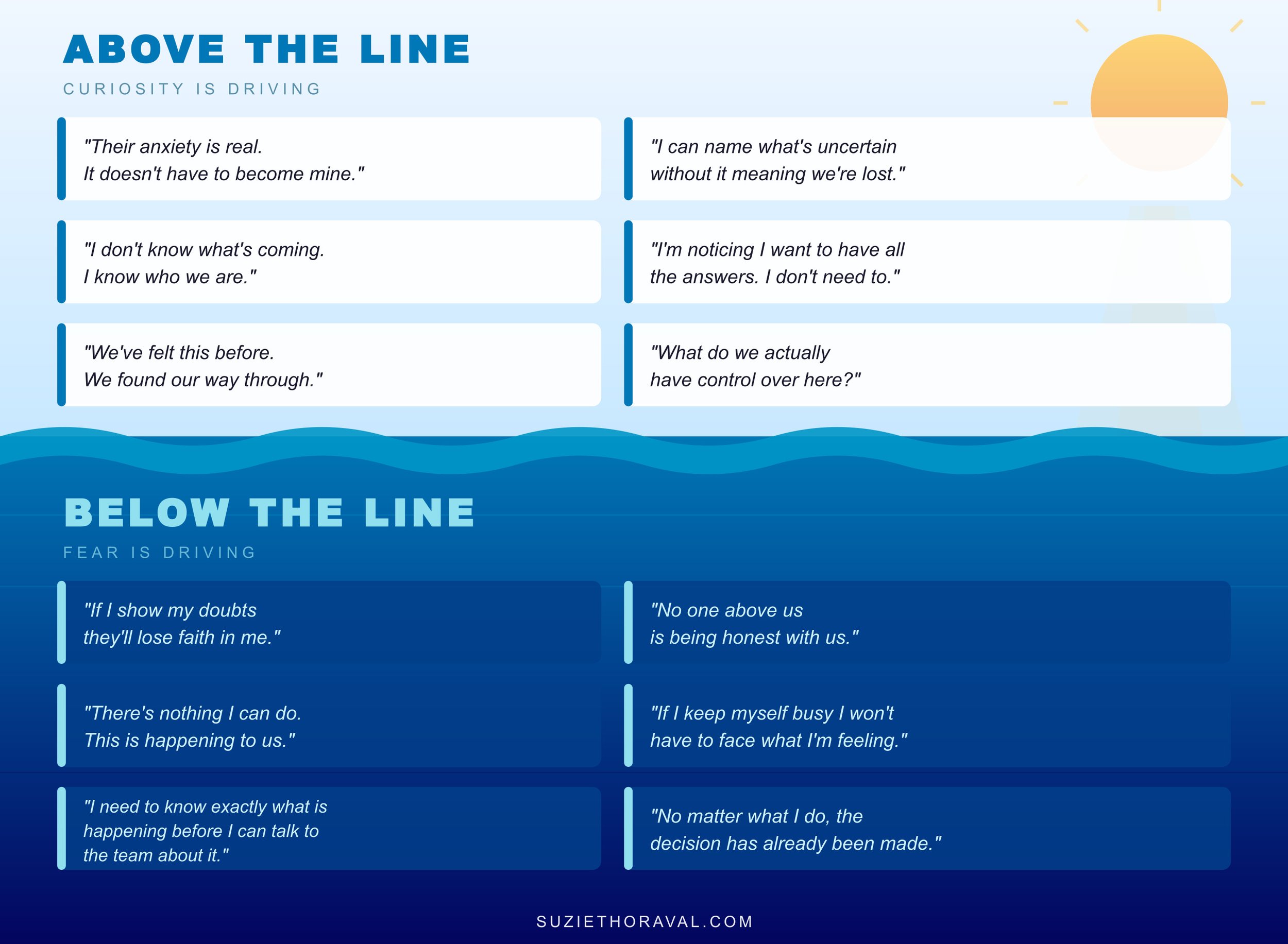
At any moment, a leader is operating from one of two places. Below the line, fear is driving your actions. You become closed and defensive, scanning for threat, focused on protecting yourself or proving you are right. It is what can naturally happen when the pressure feels high, external conditions are uncertain, and you have a lot you are carrying.
Above the line, curiosity is guiding your leadership. You stay open to what is actually happening. You take responsibility for what you can. You focus on what you can influence. You stay present with the people around you without being pulled under by what they are feeling.
When I'm below the line, what do I do about it?
Noticing where you and your team are, accepting that you or they are below the line is the first step that gives you perspective.
From there, rather than trying harder, get curious about what’s happening and what’s actually going on as well as what you actually have influence over.
Then, when ready, making open and curious choices about what you do next with your words and actions can make a big difference to finding your way above the line and staying grounded during uncertain times.

Three things worth trying
Find your early warning signal. Most people have something they can recognise when they start to feel below the line, whether it be a phrase they use, a way they go quiet, a shift in their body. Learn to recognise yours before the full below-the-line response sets in.
Stay present without absorbing your team's anxiety. When someone brings you their worry, you do not have to fix it or share it. Being with someone in their difficulty is different from taking it on as your own.
Notice the recovery, not the dip. You will go below the line. Every leader does. What matters is how quickly you notice and how you find your way back above the line.
When things are uncertain at work, what is your most common below-the-line response, and how do you know when it is happening?
