The Powerful Impact of Authentic Leadership on Teams and Culture
By Suzie Thoraval
Why authenticity matters - and how it helps foster trust
“People don’t care how much you know until they know how much you care.”
At the Australian Institute of Company Director’s dinner last week, Australian Open CEO, Craig Tiley shared a series of reflections that have stayed with me. He spoke about leadership as a privilege and described how authenticity shapes the way he builds teams.
When someone new joins the organisation, he wants to understand who they are and how they think, rather than focusing on their technical expertise, which is a given. He makes a point of learning names. He supports collective leadership while taking responsibility when things go wrong. And he is open about moments when things are hard.
Reading more about Craig's leadership approach afterwards, I can see how deeply he values people. He empowers staff across the grounds to identify improvements, and he follows up after the tournament to learn what worked and where adjustments are needed. He leads with authenticity and calm, putting people first and staying clear about the purpose that guides the organisation.
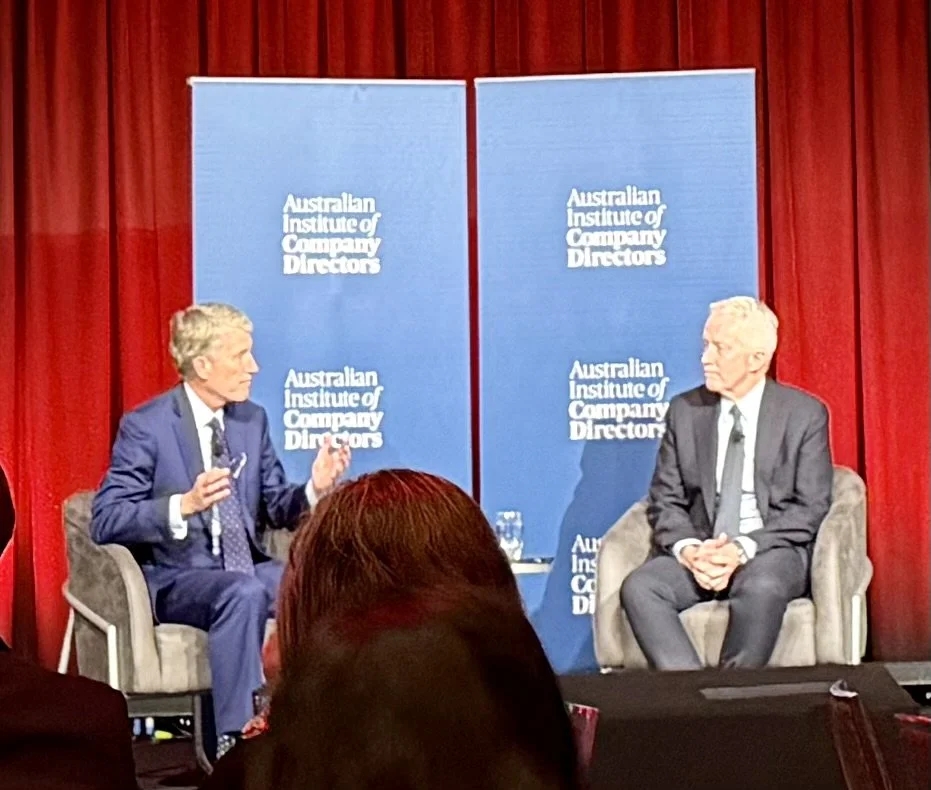
Australian Open CEO, Craig Tiley fireside chat with Heith Mackay-Cruise FAICD, AICD Deputy Chair
The demands of authenticity
Authenticity can feel like a simple concept, yet leaders often describe it as challenging in practice. Many feel pressure to appear certain when the path ahead is unclear. Others carry expectations that they should keep emotions to themselves or maintain a polished exterior.
They feel they need to be the calm and graceful swan on the surface who might be paddling hard underneath. Some leaders have worked in environments where openness was not encouraged, so the idea feels unwelcome.
These pressures can create distance between the leader employees see and the person the leader feels they are. When this distance widens, people begin to rely on assumptions.
They hesitate to raise concerns and often feel unsure about how decisions are made. This creates a climate where uncertainty becomes harder to manage.
Authenticity brings people closer. When they understand what you value and where you’re heading, things feel more consistent and grounded. That sense of steadiness is what supports adaptive stability.
Why this matters
Leadership scholar Bill George describes authenticity as a leader’s “true north” — an inner orientation that shapes how they respond when things change. This kind of steadiness becomes especially valuable during complex work or sustained periods of change.
Research from MIT Sloan shows that people respond with greater confidence when leaders share information with clarity and directness, even when outcomes are still emerging. Transparency signals that the leader is engaged, attentive and thinking ahead. It supports collective decision-making and reduces the kind of uncertainty that drains energy.
Gallup’s recent global workplace analysis also highlights a strong link between trust in leadership and discretionary effort. When people have confidence in their leader’s integrity and intent, they contribute ideas earlier and stay engaged through challenging conditions.
Authenticity strengthens the connection between leaders and teams. That connection forms the ground for resilience and adaptability.

Authenticity in action
Leena Nair, CEO of Chanel, is a powerful example of authenticity expressed through empathy and courage. She stepped into the leadership of a global luxury brand with a background that looked very different from the traditional profile of its executives. She didn’t try to imitate what came before. Instead, she led in a way that reflected her own principles — listening deeply, centring people, and creating space for diverse voices.
Colleagues often describe her leadership as compassionate and human. She speaks with openness about the importance of wellbeing and belonging. She gets out and talks to people across the business, and she pays attention to what the work environment feels like for them. Her approach brings a sense of calm presence to an industry known for pace, intensity and high expectations.
The strength of her leadership comes from alignment. People experience her as consistent — the same person in every context. That consistency creates trust.
Contrast this with the leadership story of WeWork under co-founder, Adam Neumann. WeWork grew quickly and generated excitement, yet people inside the company often experienced unpredictability and frequent changes in direction. The gap between the message and the lived experience widened over time. When trust was eroded, the organisation’s momentum became hard to sustain.
Both stories highlight an important insight: People look for consistency between what you say, how you act and what you believe. When that consistency is there, it steadies the whole team.

How you can build authenticity
Authenticity grows through small, consistent habits.
Clarify your three non-negotiables Choose the three behaviours you want to always bring into every interaction - even on tough days. This sets a behavioural anchor.
Share your intent Let people know how you approach decisions, what matters to you and how you think about uncertainty. A short statement like: “My aim is to lead in a way that is steady, values-aligned and supportive of people doing their best work” creates alignment and reduces assumptions.
Use 'Truth + Direction' in communication Give clear information about what is known, what is emerging and how you what the next steps to be. “This is what we know, this is what we’re watching, and this is how we’ll move forward” builds clarity and psychological safety.
Invite perspectives Create regular moments where people can contribute ideas and observations. It supports shared understanding, strengthens connection as well as decision making.
Ask yourself:
What pressures or expectations make it harder to show up as your genuine self?
How do people experience your leadership across different situations? Are you consistent?
Where could greater openness strengthen trust and alignment?
Closing thoughts
Authenticity strengthens leadership by providing a clear sense of direction and a deeper connection with people. It helps teams navigate uncertainty with more confidence and creates an environment where ideas are shared earlier and collaboration feels natural.
When leaders show up authentically, it inspires others to do the same.
What does leading by being true to yourself look like for you in the year ahead?
